
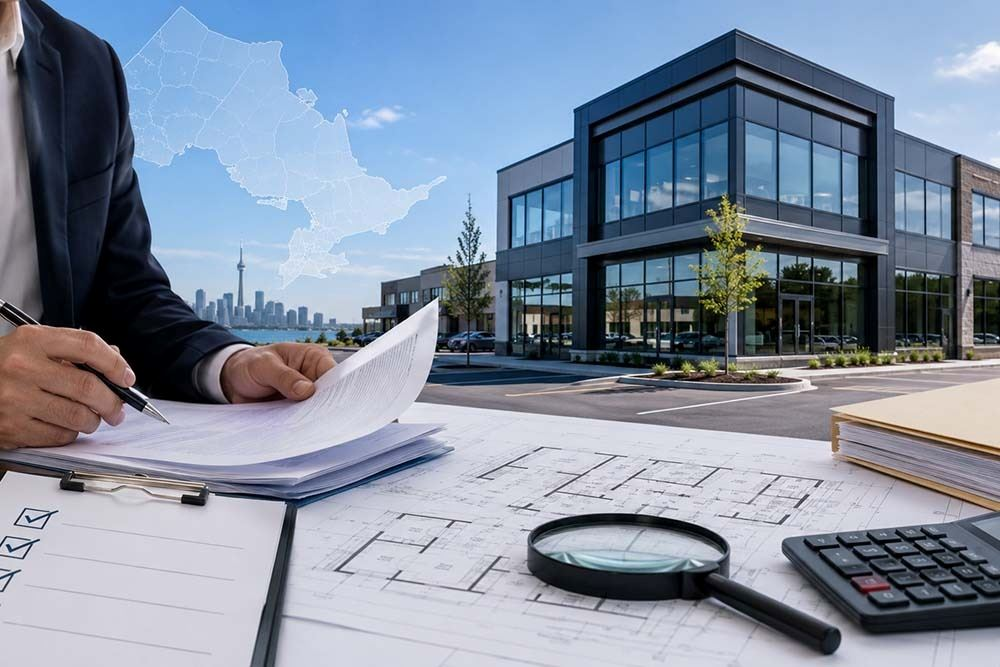

Purchasing commercial real estate is one of the most significant investments a business or investor can make. Whether you are buying an office building, retail plaza, industrial warehouse, or mixed-use property, completing thorough due diligence is essential before finalizing the transaction. Failing to conduct critical investigations can result in unexpected repair costs, legal issues, environmental liabilities, and reduced investment returns.
Understanding commercial real estate due diligence in Ontario 2026 helps buyers identify potential risks, verify property information, and negotiate with confidence. A well-planned due diligence process protects your investment and provides greater certainty before committing to a purchase.
What Is Commercial Real Estate Due Diligence?
Commercial due diligence is the comprehensive investigation conducted before purchasing a commercial property. Its purpose is to confirm that the property meets your financial, legal, environmental, and operational expectations.
A proper commercial real estate due diligence Ontario 2026 process examines everything from ownership records and zoning compliance to building condition, leases, environmental reports, and financial performance.
Rather than relying solely on information provided by the seller, buyers independently verify all important facts before closing.
Why Due Diligence Matters
Commercial properties often involve complex financial arrangements, multiple tenants, maintenance obligations, and regulatory requirements.
Without proper investigation, buyers may inherit expensive structural problems, environmental contamination, unresolved legal disputes, unpaid taxes, or leases that generate less income than expected.
Performing due diligence on commercial buying in Ontario 2026 allows investors to uncover these issues early, negotiate repairs or price adjustments, or withdraw from the transaction if necessary.
Review Property Ownership and Legal Documents
Begin by confirming legal ownership and reviewing the property’s title.
Search for easements, restrictive covenants, encroachments, outstanding liens, mortgages, or legal claims that could affect ownership rights or future development.
Your lawyer should also review purchase agreements, title documents, existing contracts, and any ongoing litigation involving the property.
Legal verification forms a critical part of commercial real estate due diligence in Ontario, 2026.
Verify Zoning and Permitted Uses
Confirm that the property’s zoning permits your intended business activities.
Review municipal zoning bylaws, land-use restrictions, parking requirements, signage regulations, future development plans, and any outstanding municipal compliance issues.
If redevelopment or expansion is planned, determine whether approvals or zoning amendments may be required before purchasing.
Complete a Professional Property Inspection
A comprehensive building inspection helps identify physical issues that may require immediate or future repairs.
An effective commercial property inspection checklist in Ontario should include:
- Roof condition
- Foundation and structural integrity
- HVAC systems
- Plumbing and electrical systems
- Fire safety equipment
- Accessibility compliance
- Building envelope
- Parking lots and drainage
- Elevators and mechanical systems
- Interior finishes and maintenance needs
Inspection findings often influence purchase negotiations and long-term budgeting.
Conduct Environmental Assessments
Environmental investigations are among the most important aspects of commercial property transactions.
Many lenders require a Phase I Environmental Site Assessment before approving financing. This assessment reviews historical property use and identifies potential contamination risks.
If concerns are identified, a Phase II Environmental Site Assessment involving soil and groundwater testing may be recommended.
Understanding what to investigate before buying commercial property in Canada includes evaluating environmental risks such as underground storage tanks, hazardous materials, chemical contamination, asbestos, mold, and fuel spills.
Environmental due diligence helps buyers avoid costly cleanup responsibilities after closing.
Review Financial Performance
Never rely solely on the seller’s income projections.
Request rent rolls, operating statements, tax returns where appropriate, lease agreements, utility expenses, maintenance records, vacancy history, capital expenditures, and property tax information.
Verify rental income by comparing lease agreements with actual rent payments and tenant records.
Carefully reviewing financial documentation remains an essential part of due diligence in commercial buying in Ontario on 2026 because it confirms the property’s true income potential and operating expenses.
Examine Existing Leases
For income-producing properties, every lease should be reviewed carefully.
Confirm lease terms, rental rates, renewal options, security deposits, maintenance responsibilities, escalation clauses, tenant improvement obligations, and default provisions.
Understanding tenant stability helps evaluate future cash flow and investment performance.
Assess Insurance and Risk
Review current insurance coverage and determine whether additional protection may be necessary after purchase.
Evaluate flood risks, fire protection, liability exposure, building replacement costs, and local environmental hazards that may influence insurance premiums.
Insurance planning should form part of your overall commercial property inspection checklist in Ontario.
Estimate Future Capital Costs
Due diligence extends beyond current property conditions.
Consider expected future expenses such as roof replacement, HVAC upgrades, parking lot resurfacing, building modernization, accessibility improvements, and energy efficiency upgrades.
Factoring these costs into your investment analysis provides a more accurate understanding of long-term profitability.
How Long Does Due Diligence Take?
The due diligence period varies depending on the size and complexity of the property.
Smaller commercial purchases may require only two to three weeks, while larger multi-tenant, industrial, or development properties often require 30 to 90 days for complete investigations.
Allowing sufficient time for inspections, financing, legal review, environmental assessments, and financial verification ensures a thorough commercial real estate due diligence Ontario 2026 process.
Conclusion
Buying commercial property without proper investigation can expose investors to significant financial and legal risks. Completing commercial real estate due diligence in Ontario in 2026, following a comprehensive commercial property inspection checklist in Ontario, and understanding what to investigate before buying commercial property in Canada are essential steps for making informed investment decisions.
Whether you are purchasing your first commercial building or expanding an existing portfolio, careful due diligence in commercial buying Ontario 2026 provides the confidence needed to negotiate effectively, minimize risk, and maximize long-term investment success.
FAQ’s
Q1. What is commercial real estate due diligence in Ontario?
A: Commercial real estate due diligence is the process of thoroughly investigating a property’s legal, financial, physical, environmental, and operational conditions before completing a purchase. It helps buyers identify risks and verify important information.
Q2. What environmental checks are needed for commercial property in Ontario?
A: Common environmental checks include a Phase I Environmental Site Assessment, historical property use review, and, if necessary, a Phase II assessment involving soil and groundwater testing. Buyers should also investigate asbestos, mold, underground storage tanks, hazardous materials, and contamination risks.
Q3. How do I verify the income from a commercial property before buying?
A: Review rent rolls, lease agreements, tenant payment histories, operating statements, vacancy records, expense reports, and financial statements. Comparing lease terms with actual rental payments helps confirm the property’s income.
Q4. How long does commercial property due diligence take in Ontario?
A: Most commercial due diligence periods range from two to six weeks for standard properties, while larger or more complex transactions may require 30 to 90 days, depending on inspections, financing, environmental reviews, and legal investigations.



Leave a Reply
You must be logged in to post a comment.